The Dawn of a New Creative Era
The year 2026 has marked a definitive shift in how we perceive and produce digital content. No longer is artificial intelligence merely a novelty or a simple autocomplete tool; it has evolved into a sophisticated creative partner that handles the heavy lifting of research, formatting, and initial drafting. For creators, this means a transition from "producers" to "curators" and "directors" of their own ideas. This guide explores the massive impact of these tools and how you can leverage them to stay ahead in a saturated digital market.
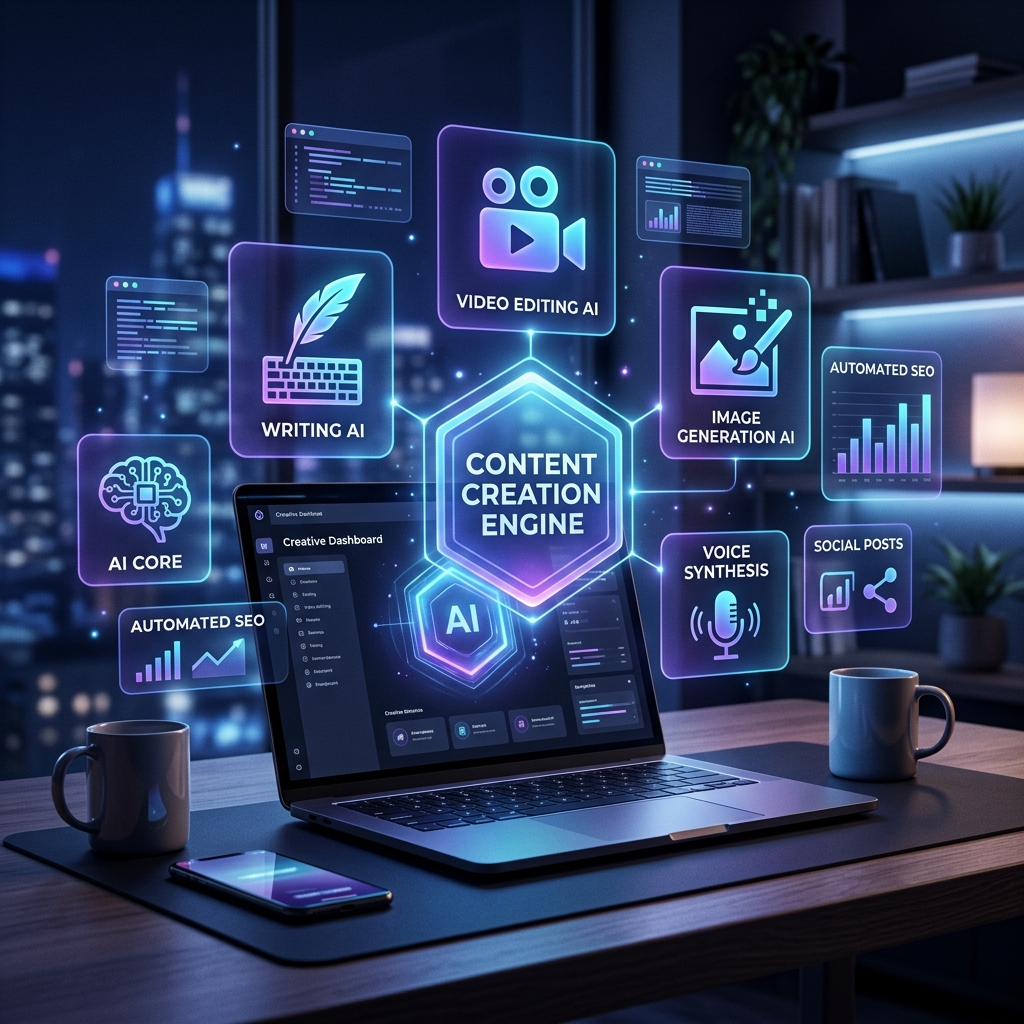
When we talk about AI content creation, we aren’t just talking about text. We are talking about a multi-modal revolution. Today, a single prompt can spark a 2,000-word article, a set of photorealistic illustrations, and a short video clip to go with it. The barrier to entry for high-quality production has never been lower, but the bar for "exceptional" content has been raised significantly. Human creativity, taste, and strategic thinking are now the primary differentiators.
1. The Power of Advanced Large Language Models
At the heart of this revolution are the Large Language Models (LLMs) that have become increasingly nuanced. Unlike the robotic outputs of a few years ago, modern models understand tone, subtext, and complex instructions. They can mimic a brand voice with startling accuracy, allowing marketing teams to scale their operations without losing their unique identity.
For instance, using a ChatGPT writing tool has become standard practice for outlining complex whitepapers or generating hundreds of social media hooks in seconds. The key is not to let the AI do all the thinking, but to use it as a brainstorming partner. By providing specific context and "seed" ideas, you can guide the model to produce insights that feel fresh and relevant rather than generic.
Another heavy hitter in this space is Claude, known for its exceptional reasoning and safety features. Many writers prefer it for deep analysis and handling large documents because of its massive context window. Whether you are summarizing a 100-page industry report or looking for a critique of your latest screenplay, these models provide a level of speed that was previously impossible.
2. Visual Storytelling: Beyond Simple Images
The visual landscape has seen an even more dramatic transformation. We have moved past the era of "weird AI hands" into a period where AI-generated visuals are indistinguishable from professional photography or digital painting. This has massive implications for web design, advertising, and storytelling.
Tools like Midjourney have redefined the role of a concept artist. Instead of spending days on a single mood board, a designer can iterate through dozens of high-fidelity concepts in an hour. This allows for a more experimental approach to design, where the cost of failure is virtually zero. You can test different lighting, perspectives, and styles with a simple change in your prompt parameters.
For those who need more control, specialized platforms allow you to train models on your own visual assets, ensuring that every generated image fits perfectly within your existing brand aesthetic. This level of customization is what separates amateur AI usage from professional-grade production.
3. The Video Revolution: From Text to Cinema
If 2024 was the year of AI images, 2026 is undoubtedly the year of AI video. We are seeing the emergence of tools that can generate coherent, high-definition video clips from text prompts or static images. This is disrupting the entire stock footage industry and changing how small businesses approach video marketing.
A tool like Runway allows creators to add cinematic motion to their ideas without a full film crew. Whether it is a background transition for a YouTube video or a high-impact social media ad, the ability to "direct" AI-generated motion is a superpower. We are also seeing the rise of AI avatars that can deliver personalized messages to thousands of customers simultaneously, making 1-to-1 video marketing a reality at scale.
4. Streamlining the Developer Workflow
Content creation isn't just about marketing; it is also about building the platforms where that content lives. AI has deeply embedded itself in the developer workflow, allowing for faster prototyping and fewer bugs. For those building content-heavy sites, these tools are indispensable.
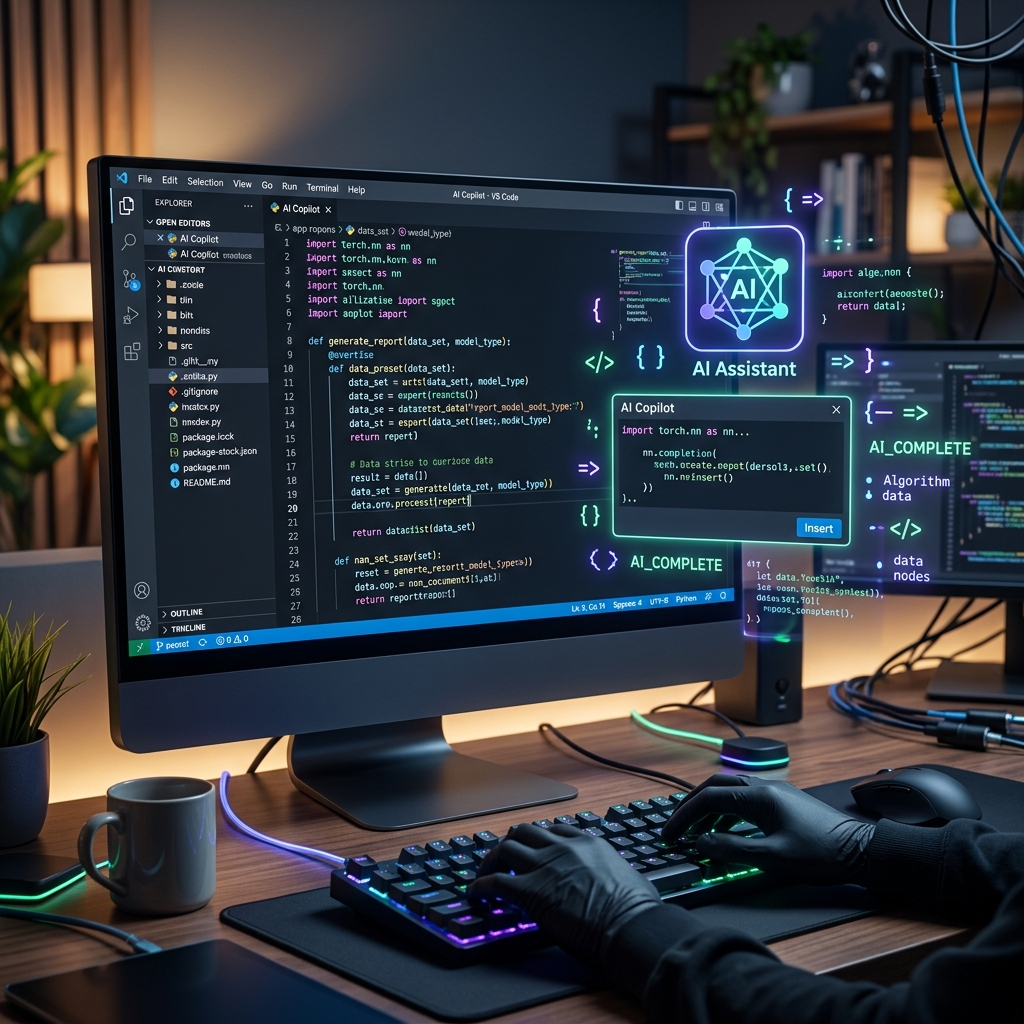
Modern editors like Cursor provide an AI-native coding experience that feels like having a senior developer sitting next to you. It understands your entire codebase and can suggest complex refactors or write entire components based on a natural language description. This speeds up the "build" phase of any creative project, letting you focus on the user experience and the content itself.
5. Practical Examples of AI Integration
Let’s look at how a modern creative agency might use these tools in a single campaign:
- Phase 1: Research. Use an LLM to analyze current market trends and competitor content.
- Phase 2: Ideation. Generate 50 unique campaign angles and pick the top 3.
- Phase 3: Visuals. Use image generators to create custom hero images and social banners that match the campaign’s emotional tone.
- Phase 4: Copywriting. Draft the primary blog post, email sequence, and ad copy using AI as a starting point, followed by human editing for "soul" and accuracy.
- Phase 5: Video. Create 15-second teaser clips for Instagram and TikTok using text-to-video tools.
Conclusion: Embracing the Future
The integration of AI into content creation is not about replacing human talent; it is about amplifying it. By automating the mundane and providing a limitless sandbox for experimentation, these tools allow us to be more creative than ever before. The most successful creators of 2026 are those who view AI as a powerful instrument to be mastered, rather than a threat to be feared. Start small, experiment often, and remember that the most important ingredient in any piece of content is still your unique perspective.