Beyond Autocomplete
If you told a developer in 2010 that their code editor would soon be able to explain complex bugs and write entire feature sets from scratch, they would have laughed. Today, it is our reality. AI coding assistants have evolved from simple "Tab-to-complete" tools into intelligent pair programmers that understand the context of entire applications.
1. Context is King
The real breakthrough in AI coding hasn't been just better language models, but better context management. Modern assistants don't just look at the line you are currently typing; they index your entire project, your documentation, and even your Git history. This allows them to make suggestions that are actually useful and idiomatic to your specific codebase.
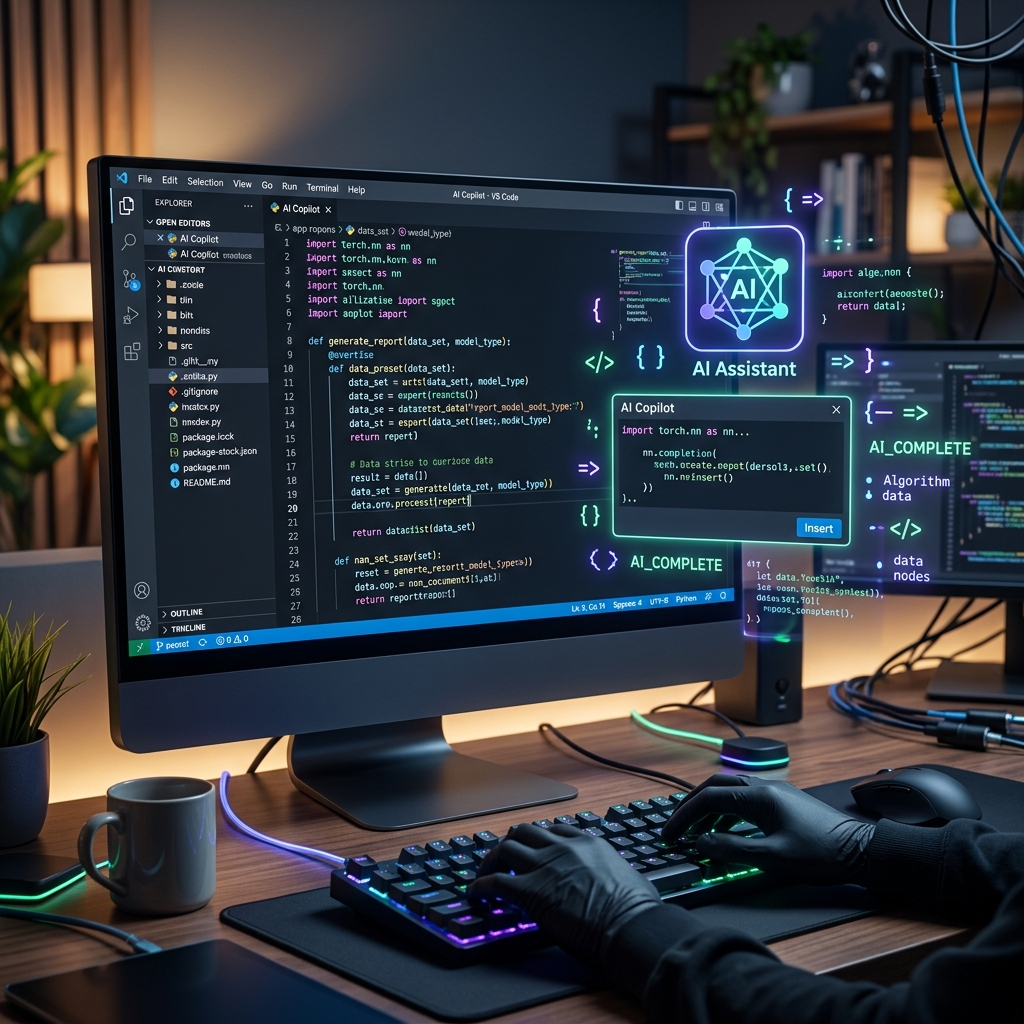
Tools like Cursor are at the forefront of this movement. By integrating the AI directly into the heart of the editor, it eliminates the friction of copying and pasting code into a separate chat window. You can simply highlight a block of code and ask for a refactor, or describe a new feature and watch the AI navigate through five different files to implement the necessary changes.
2. Reducing the Cognitive Load
Programming is essentially about managing complexity. AI helps reduce the "cognitive load" by handling the boilerplate and the repetitive tasks that often lead to burnout. This frees up developers to think about higher-level logic, security architecture, and user experience. It is about moving from "writing lines of code" to "solving problems."
3. Learning and Mentorship
For junior developers, AI assistants serve as a 24/7 mentor. They can explain why a certain pattern is preferred over another or help decipher an opaque error message. This has the potential to drastically shorten the learning curve for new technologies, making the industry more accessible to people from diverse backgrounds.
Conclusion
AI is not replacing developers; it is giving them a massive upgrade. The "10x Developer" of the future is not someone who types faster, but someone who knows how to best direct their AI assistants to build robust, scalable, and impactful software.