
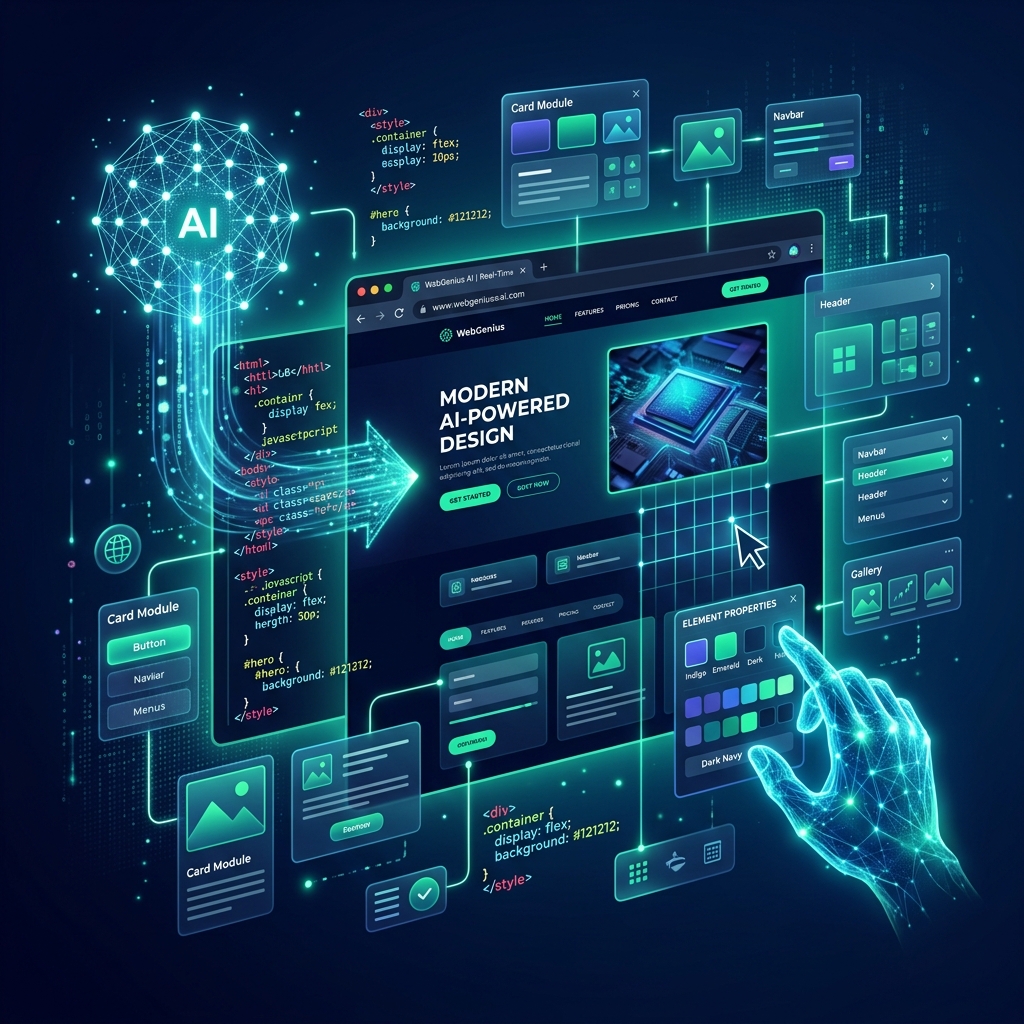
Coding at the Speed of Thought
The landscape of web development has changed more in the last two years than in the previous ten. In 2026, the question is no longer "should I use AI?" but "how can I best integrate AI into my workflow?" We have moved from simple code completion to full-scale autonomous agents that can help architect entire systems.
1. AI-Native Code Editors
Traditional IDEs are being replaced by environments built from the ground up to support large language models. These tools don't just suggest the next line of code; they understand the intent behind your project. They can suggest architectural patterns, identify potential security flaws before you even hit "save," and even write comprehensive test suites based on your requirements.
For many developers, Cursor has become the primary tool of choice. Its ability to "chat" with your codebase allows for a level of productivity that was previously unthinkable. You can ask it to "refactor this entire module to use a more efficient data structure," and it will handle the implementation across multiple files, ensuring everything remains consistent.
2. Autonomous Agents and DevOps
The "Ops" in DevOps is also being transformed. We are seeing the rise of AI agents that can monitor server health, automatically adjust scaling parameters, and even attempt to fix broken builds by analyzing error logs and committing fixes. This reduces the "on-call" burden for developers and ensures higher uptime for complex applications.
Tools that specialize in data extraction and automation, such as Apify, are also becoming more intelligent. They can adapt to website changes on the fly, ensuring that data pipelines remain robust even when the source material is dynamic and unpredictable.
3. The Human Element
With AI handling so much of the boilerplate, what is left for the human developer? The focus has shifted to high-level system design, user experience, and complex problem-solving. Developers are now more like architects than bricklayers. They define the "what" and the "why," while the AI handles the "how."
Conclusion
The future of web development is bright, but it requires a willingness to learn and adapt. The developers who will thrive are those who embrace these new tools, using them to eliminate drudgery and focus on creating truly innovative digital experiences.